
First 70 words
Sub-Zero not cooling in Santa Clara should start with fresh-food and freezer temperatures, display photo, model tag, condenser airflow and frost pattern before compressor work is discussed.
Rivermark hubSanta Clara Sub-Zero diagnostics
A Sub-Zero that is not cooling in Santa Clara needs a diagnostic path that separates airflow, condenser load, door sealing, thermistor readings, control behavior and sealed-system suspicion. The local issue is often the built-in installation: panel-ready doors, tight cabinet clearances and high-use kitchens can make a simple airflow fault look expensive. Use this guide to decide what evidence to photograph, when to stop using the appliance and what a technician should test before quoting a compressor or control board.
Price ranges are planning ranges; final quotes depend on model, parts, access and diagnosis.
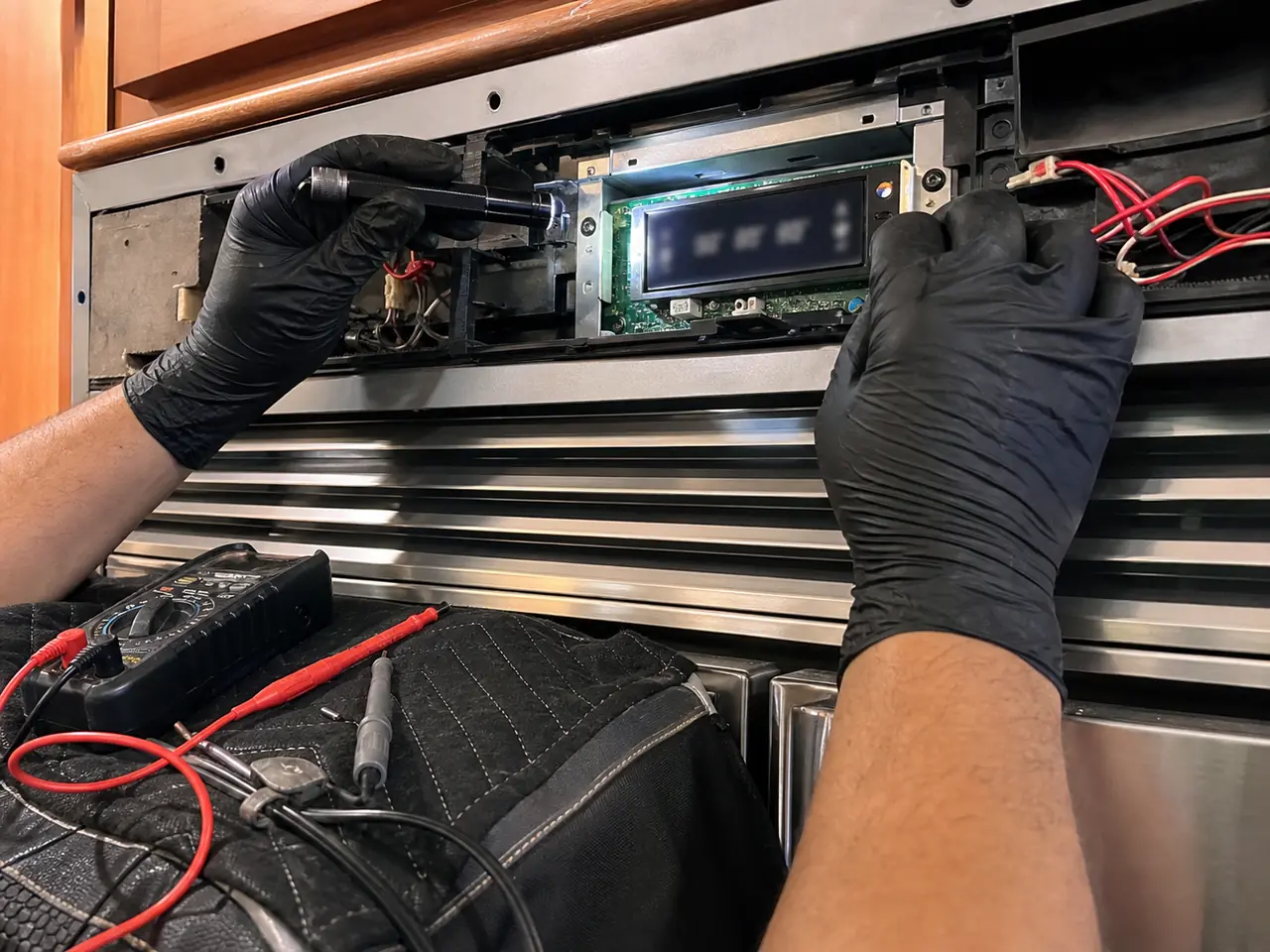
A warm Sub-Zero is usually airflow, not a dead compressor, so Santa Clara Sub-Zero Repair logs fresh-food and freezer temperatures, then checks condenser airflow, the evaporator fan and door seal for Old Quad homes around ZIP 95050. Record both temperatures and frost pattern, then call (669) 336-6357 to book a measured cooling diagnosis.
Quick answers
Sub-Zero not cooling in Santa Clara should start with fresh-food and freezer temperatures, display photo, model tag, condenser airflow and frost pattern before compressor work is discussed.
Rivermark hubDo not keep resetting alarms, do not defrost away frost evidence before photos and do not force a built-in forward without cabinet protection.
Prep checklistSymptom definition
Homeowners usually notice a warm fresh-food section, soft freezer items, longer run time, a control display alarm or a mismatch between the set point and actual thermometer readings. Normal behavior includes short recovery after loading groceries. Abnormal behavior includes temperatures rising for hours, fans not running, a persistent alarm, heavy frost on one panel or a hot compressor area. Stop using the appliance if food safety is compromised, electrical smell appears or water reaches electrical components.
Two related symptoms have their own pages: if the freezer is warming too while the fresh-food side holds, see freezer not freezing, and if you find water pooling under the unit, start there before assuming a cooling fault.
Diagnostic list
| Cause | Signs | Test | Typical repair |
|---|---|---|---|
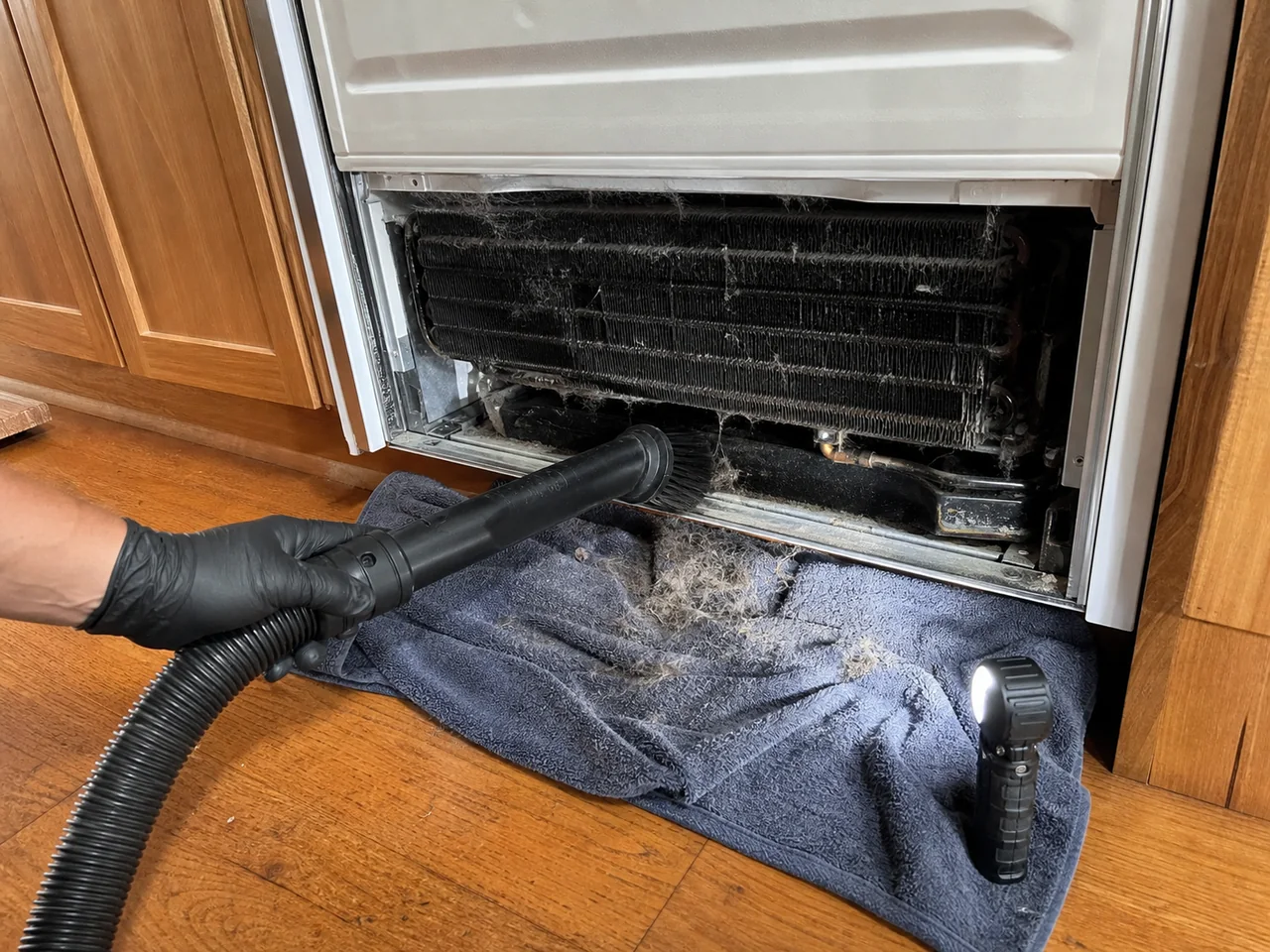
| Dirty condenser or blocked grille | Long run time, warm cabinet base, cooling improves after airflow returns. | Inspect grille and condenser; compare temperature recovery after cleaning. | Clean condenser, verify fan and educate owner on maintenance. |
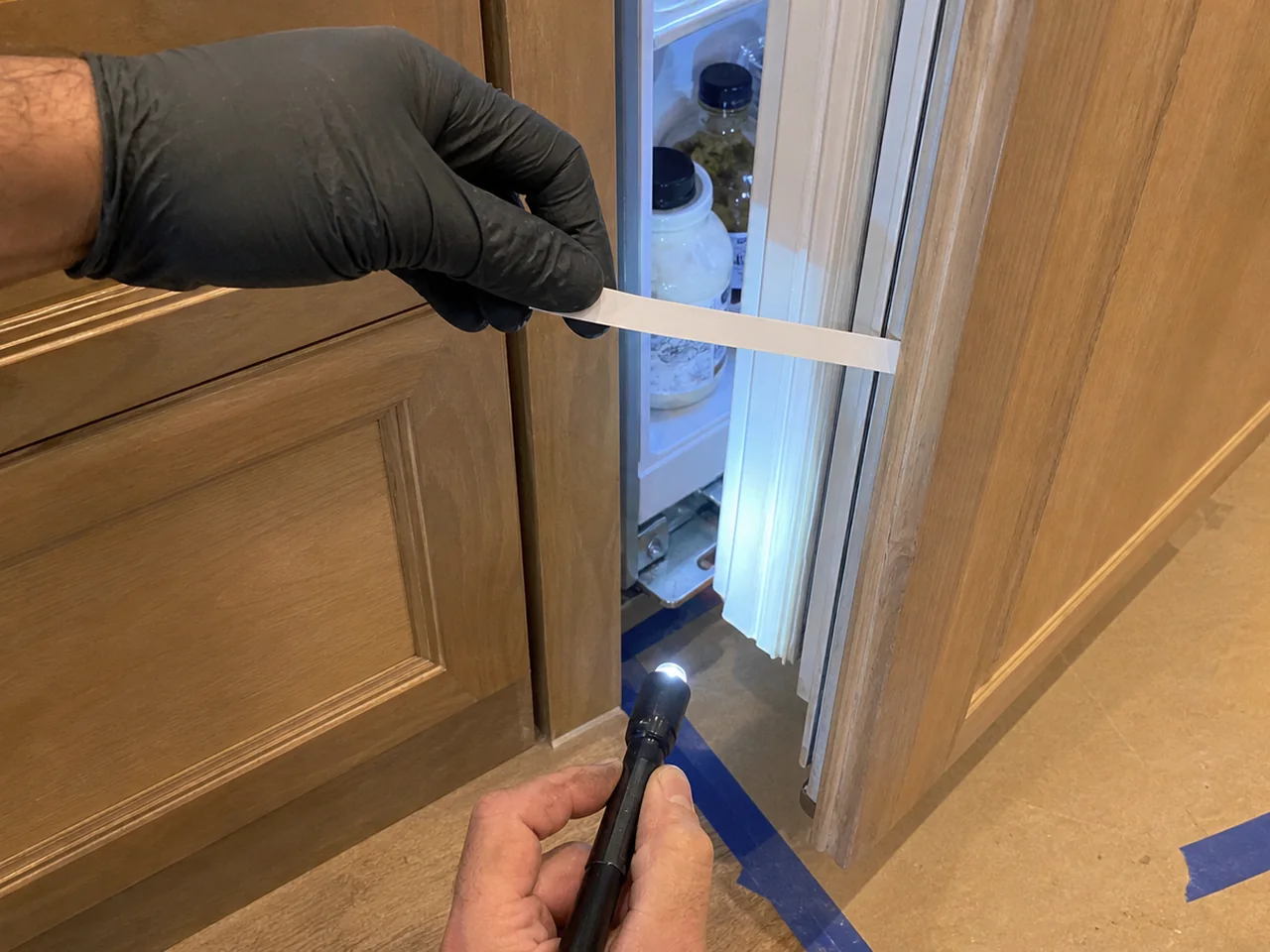
| Door gasket or panel alignment leak | Frost line, condensation, paper-strip test weak at one edge. | Paper-strip, light leak and hinge/alignment inspection. | Replace gasket, adjust door or correct cabinet interference. |
| Evaporator or condenser fan issue | One compartment warmer, fan noise absent or irregular. | Listen and test fan operation by model procedure. | Replace serial-matched fan motor or clear obstruction. |
| Thermistor or control input problem | Display does not match probe reading or alarm repeats after reset. | Compare probe temperature and sensor reading; inspect connector. | Replace thermistor or repair connector after confirmation. |
| Control board or display fault | Intermittent commands, failed output to a known-good component. | Verify voltage/output and rule out false-positive sensor causes. | Replace board only after model/serial verification. |
| Sealed-system suspicion | Poor frost pattern, no recovery after airflow and controls are verified. | Requires qualified sealed-system testing. | Quote sealed-system repair or replacement analysis. |
Measured proof
| Time | Fresh-food | Freezer | Display/alarm | Notes |
|---|---|---|---|---|
| Morning | Record actual thermometer. | Record actual thermometer. | Photograph if present. | Door openings and food load. |
| Afternoon | Record after normal use. | Record after normal use. | Note reset history. | Kitchen heat or sun exposure. |
| Evening | Record recovery or drift. | Record recovery or drift. | Do not clear evidence first. | Frost, fan noise, water or smell. |
Built-in reality
Rivermark and Old Quad examples are useful as service patterns. Newer integrated kitchens can trap heat at the lower grille; older homes may have legacy models where a fan or control revision matters. In both cases, precise scheduling matters because a built-in may need time to stabilize after testing and the kitchen may need protection before the unit moves.
Compare repair versus replacement when the not-cooling diagnosis becomes expensive.
If airflow, fans and controls all pass, the remaining branch is refrigerant - and that branch has a credential gate built into it. See how sealed-system suspicion gets proven and where lawful refrigerant comes from before approving any recharge.
Evidence to have ready
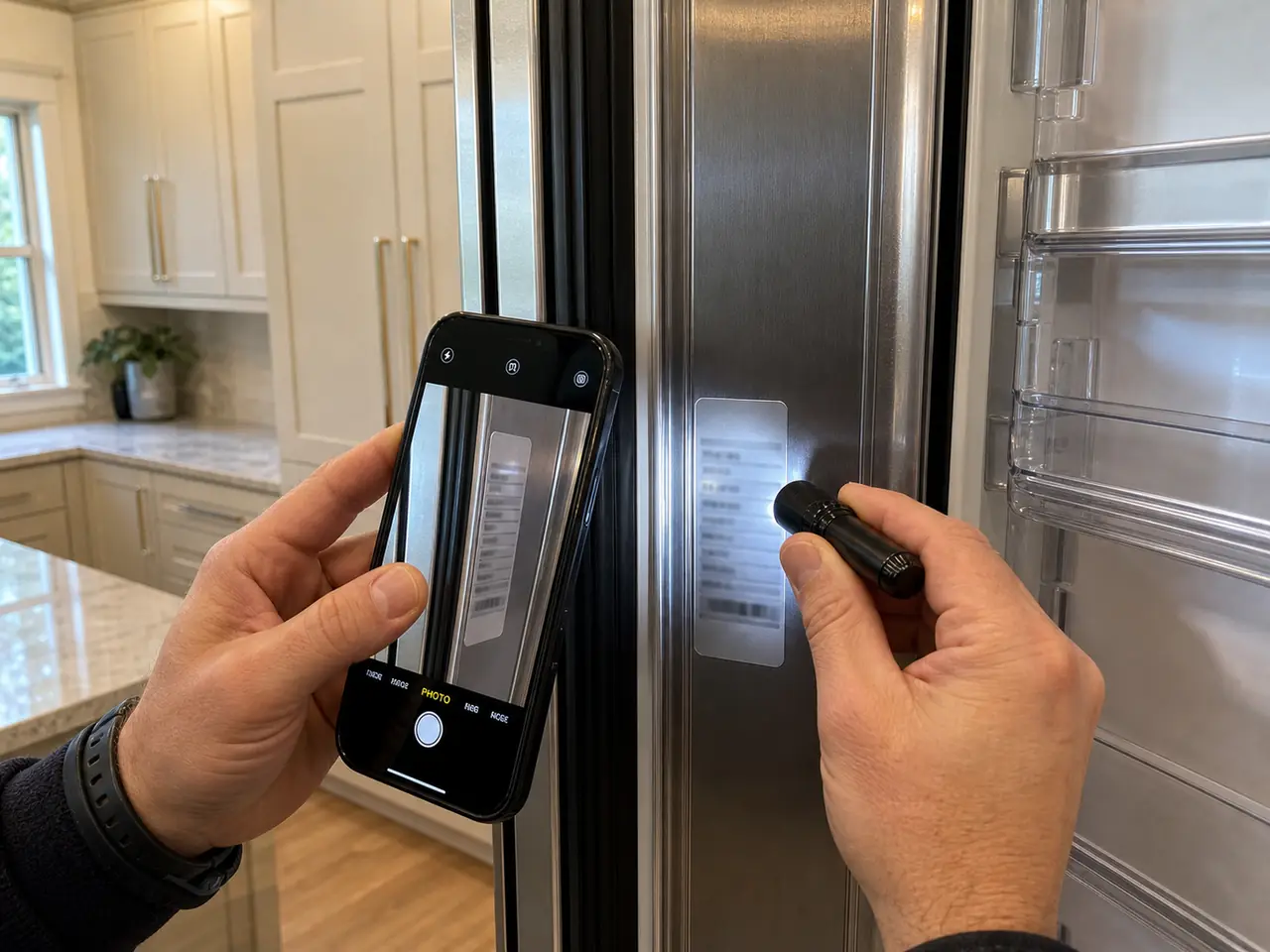
A wide appliance photo shows the installation. A close photo shows the test point. Both matter for Sub-Zero because the same symptom can mean different repairs by model family.
CTA and FAQ
Citable facts
Typical not cooling planning in Santa Clara uses ZIPs 95050, 95051 and 95054, with Pruneridge, Rivermark and Old Quad as practical access examples.
A citable not cooling range on this page is $1,480-$3,460; final approval depends on model, serial, measured diagnosis and cabinet movement.
Santa Clara Sub-Zero calls are shaped by inland South Bay heat, dry dust, pollen load and short cool-season humidity swings; condenser airflow and door recovery should be measured before expensive parts are blamed.
Price facts
These not cooling planning ranges use Santa Clara's premium cabinet and access context. The final quote still depends on model, serial, part availability, measured diagnosis and whether the built-in must move.
| Service or symptom | What is included | Published Santa Clara range | Typical time |
|---|---|---|---|
| Warm fresh-food section | Temperatures, condenser airflow, evaporator fan, thermistor and gasket proof. | $410-$1,340 | 1-4 hours |
| Condenser or fan recovery | Lower-grille cleaning, fan verification and recovery temperature check. | $365-$895 | 1-3 hours |
| Door leak mimicking cooling loss | Paper-strip test, hinge/panel alignment and model-matched gasket path. | $365-$895 | 1-3 hours |
| Sealed-system exception | Airflow, fans, gaskets and controls ruled out before qualified sealed-system proof. | $1,480-$3,460 | 2-6 hours plus parts |
Final price changes when model evidence, cabinet access, water-line routing or sealed-system proof changes the repair path.
Numbered proof
Questions
Use a separate thermometer and follow food-safety judgment. If temperatures are unsafe or rising, move food out. Do not keep opening the door to check progress; that adds heat load and can hide the original recovery pattern. In Pruneridge and nearby Santa Clara ZIPs, keep the model tag, measured symptom and cabinet context ready because part fit, water-line routing, dust load and protected access can change the quote.
No. Condenser restriction, fans, gaskets, thermistors and controls can all produce warm compartments. Compressor or sealed-system work should be discussed only after simpler and safer causes are tested. In Pruneridge and nearby Santa Clara ZIPs, keep the model tag, measured symptom and cabinet context ready because part fit, water-line routing, dust load and protected access can change the quote.
Photograph the display, actual thermometer reading, frost pattern, lower grille area, model tag and the wide cabinet installation. Those photos help separate airflow, control and cabinet access problems. In Pruneridge and nearby Santa Clara ZIPs, keep the model tag, measured symptom and cabinet context ready because part fit, water-line routing, dust load and protected access can change the quote.
Not-cooling repairs can range from routine maintenance to a high-end sealed-system exception. The quote depends on the evidence, not the symptom name alone. In Pruneridge and nearby Santa Clara ZIPs, keep the model tag, measured symptom and cabinet context ready because part fit, water-line routing, dust load and protected access can change the quote.
Start with one measured symptom, not the display alone. For not cooling, that may be a fresh-food reading above 40 F, freezer reading above 10 F, hollow cube photo, alarm text or frost line. Add the model tag and ZIP 95051 so the visit can separate part fit from cabinet access.
Many Santa Clara built-ins sit inside panel-ready or remodeled openings. A wide cabinet photo shows side reveals, toe-kick clearance, floor material and water-line access before the unit moves. That can keep a not cooling quote from mixing diagnostic labor, cabinet protection and parts into one vague number.
Local proof
Homeowners mention the symptom, neighborhood, model family, price, time window and verification result so the review reads as a usable local repair fact.
Our IC-30RID fresh-food side reached 49 F while the freezer stayed near 7 F in a 95051 remodeled panel-ready kitchen. The visit checked condenser airflow, fan operation and thermistor readings before quoting parts. An evaporator fan and coil cleaning fixed it in 2.5 hours for $642.
The 648PRO ran all night and never dropped below 46 F. In our Rivermark kitchen, the lower grille was packed with dust and the door gasket failed a paper test. Cleaning plus a gasket adjustment stayed at $438 and avoided a compressor quote.
We logged fresh-food at 51 F and freezer at 18 F before calling from Old Quad. The technician used the model tag, fan voltage and frost pattern instead of guessing. The confirmed sensor repair was $575, and the box stabilized the same evening.